Canadian Society for History and Philosophy of Science
Société Canadienne d'Histoire et de Philosophie des
Sciences
Communiqué
Backlash
Issue #107. 2024 – 2025
Communiqué
№ 107. 2024 – 2025
Editors
Kevin Kaiser, U. de Montréal
Aaron Sidney Wright, Dalhousie U.
Cover Image
Canadian
Museum of History, “Battle of Billings Bridge” associated
materials, MCHCMH ARCHIVES DIGITAL 2023-H000.
CSHPS Officers
President: Marga Vicedo, U. of Toronto
Past President: Tara Abraham, U.
of Guelph
First Vice-President: Ingo
Brigandt, U. of Alberta
Second Vice-President: Delia
Gavrus, U. of Winnipeg
Secretary-Treasurer: Andrew
Inkpen, Mount Allison U.
Advisory Board: David Pantalony,
Ingenium/Univ. of Ottawa; Lisa Gannett Saint Mary’s U.; Daniela Monaldi, York U.; Doreen Fraser,
U. of Waterloo; François Claveau, Université de Sherbrooke; Vincent Auffrey, U. of
Toronto
Program Committee: Mélanie
Frappier, King’s College (Chair); Eleanor Louson, Michigan State U.; Dani Inkpen, Mount Allison
U.; Vincent Guillin, UQAM
Local Arrangements:
Nominating Committee: Elizabeth
Neswald, Brock U.; Molly Kao, U. de Montréal
Social Media Committee: Megan
Krempa, U. of King’s College
Graduate Student Committee: Emma
Sigsworth, U. of Toronto .
Web / List Manager: Allan Olley, Independent
Scholar
Mots de les rédaction /
Editors’ Letter
Nous somme heureux de vous présentez l’édition 107 de la revue Communiqué de la Société Canadien
d’Histoire et Philosophie des Sciences (SCHPS/CSHPS) !
Celle-ci est le produit de la collaboration des divers membres de la
société et mets en lumières différents enjeux et événement
d’intérêt pour les membres. Avant de vous laisser explorer celle-ci, nous tenions
à soulignons quelques points..
Un événement marquant cette année a été l'arrivée
d'Aaron Wright en tant que coéditeur de Communiqué (Département
d'histoire, Université Dalhousie, Nouvelle-Écosse). Aaron
a apporté un vent de fraîcheur, notamment grâce à son engagement à ancrer
davantage Communiqué dans les enjeux de la communauté (par exemple, en proposant de mettre en
avant le sujet et le rapport du panel de l'an dernier sur « le backlash » en histoire et
philosophie des sciences). Il a également mis en lumière certaines questions plus
générales telles que l'accessibilité du Communiqué (pour les personnes
malvoyantes, par exemple) et la viabilité du processus éditorial.
Bien que ces changements soient encore « en cours de réalisation
», ils constituent des propositions plus que bienvenues et l'aide d'Aaron sur ces questions
sera précieuse .
This issue theme is centered around the concept of “backlash” in History
and Philosophy of Science (HPS). This concept, well-known in feminist activist and academic literature,
refers to the reaction of dominant groups in society against progressive changes that improve the lives of
marginalized people. Initially popularized during the US Civil Rights movement, the American journalist
Susan Faludi influentially applied the concept in the 90s to a media counter-movement reacting to the
advance of feminism. The concept has since been taken up to refer broadly to any counter-reaction to social
progress or even, more broadly, to preventive intervention to limit such progress.
In HPS, the concept has been applied to different historical episodes (e.g.
“science wars”), to explain the marginalization of feminist thought in the academic world, or to
discuss the rise of populist anti-science movements.
More immediately, it has been used to address certain attacks and pressures
experienced by researchers interested in social issues including in our CSHPS community during last
year’s Congress.
In this issue 107 of Communiqué, we invited the community to explore the relevance and
potential of this concept in the history and philosophy of science. You’ll find Lara Millman and
Letitia Meynell’s report on their round-table at p. 9 and Jörg Matthias Determann’s text on
the History of Women’s Activism in Science at p.14 that
offers some reflections on the topic.
The cover image of this issue is a sign from the “Battle of Billings Bridge,” a
February 2022 counter-protest—a backlash—which trapped the so-called “freedom” truck
convoy on a bridge over the Rideau River in Ottawa. The convoy itself could be described as a backlash to
the imposition of social restrictions during the early phases of the COVID-19 pandemic. HPS scholars might
find “We 🖤Science” both heartening and worrisome. It was an expression of the majority
Canadian opinion that rejected the convoy. It was also an example of how the dynamic of backlashes can lead
to the rejection of nuance and critical analysis. In this issue, Millman and Meynell’s discussion of
the “Backlash” panel are exemplars of responding to a backlash without sacrificing our critical
capacities, for instance in considering what makes campuses safe for all members of our academic community
.
A final comment on some changes we made to the
Communiqué are linked to our attempt to make it more accessible, within
the existing infrastructure (Google Suite). Creating this issue in Google Docs allows for an HTML version to
be published online, which is more accessible. Limitations to this system may be most evident in Docs’
poor capacity to handle figures and captions. We debated using the LaTeX document system, which is free,
open source, and creates beautiful documents. Two considerations motivated our choice to use Docs. First,
sustainability of publication for future editors, who may not be comfortable with LaTeX. Second, LaTeX is in
something of a crisis as far as accessibility is concerned, because of the near-impossibility of producing
accessible PDFs (in general), as
the TeX Users Group explains. For both institutional continuity and accessibility, we chose to work with Google’s
limitations. We hope the refreshed design appeals to a wide audience.
Kevin Kaiser est candidat au doctorat en Philosophie des sciences à
l’Université de Montréal. Il travaille sur la conceptualisation et la mesure de
l’interdisciplinarité en science et particulièrement en biologie.
Dr. Aaron Sidney Wright received his PhD from the IHPST at the University of
Toronto in 2014 and he is currently an Associate Professor of History at Dalhousie and University of
King’s College. His most recent book is More than Nothing: A history of
the vacuum in theoretical physics, 1925–1980 (Oxford).
CSHPS President’s Report 2025
Tara Abraham
(Voir ci-dessous pour la version Française)
My term as CSHPS President comes to a close in just under two weeks, so this report
will include some broad reflections on the past three years.
One of my goals as President was to facilitate interaction between graduate students
and faculty, and our Montréal meeting included a new event for CSHPS: the Social Mixer. Our evening
at Brutopia was a resounding success, and I hope this event is the start of a tradition.
During my term I have also sought to bolster graduate student representation in the
society and plans for our meetings. Since 2023 we have had a Graduate Student Advisory Committee (GSAC), who
have worked to represent student interests and needs. Grad student quiet/hangout rooms are now a part of
CSHPS meetings, and a networking mailing list has been launched. This past year was quiet for GSAC, but the
group has continued to discuss mentoring sessions, professional development activities (including life
outside of academia). I hope despite how busy grad student life is that many of you will consider joining
the GSAC for 2025-26.
Finally, we’ve made some small steps towards making the society more bilingual,
by translating the program and ensuring as much communication from the society as possible appears in both
French and English (thanks to Melanie Frappier for her translation assistance). Much more could be done on
this front, and I hope this trend continues.
The Federation’s decision to have Congress 2025 take place at George Brown
College meant we could not have an in-house Local Arrangements Coordinator who was also a CSHPS member.
Although this was a challenge, we were fortunate to have been assigned George Brown professor Silvia Caicedo
as our LAC. Silvia cheerfully and skillfully helped us with our planning for the conference and went above
and beyond to ensure we had everything we needed. Communication was seamless. Thank you to Silvia—we
could not have done this without you! I want to thank all the volunteers who made CSHPS 2025 happen, in
particular our tireless Program Co-Chairs Letitia Meynell and Mélanie Frappier, as well as Megan
Krempa, who assisted them. I also thank Lisa Gannett and Andrew Reynolds who co-organized a double session
to commemorate Kathleen Okruhlik.
As the news about Congress 2026 unfolded in the past few weeks, and given the extra
labour involved in liaising with the Federation to plan the conference, it is clear that we will need to do
some serious thinking about our relationship with Congress. This is particularly important given the
precarity of the Congress model in the face of massive budget restrictions in Canadian universities.
Planning future CSHPS meetings in a post-pandemic world means we need to weigh the high value of in-person
conferences—particularly for newer and emerging scholars where networking is much easier in
person—with the environmental benefits and accessibility of online conferences.
I want to thank all members who have agreed to serve in various committee roles in CSHPS moving
forward, particularly Andrew Inkpen, who will serve as Secretary-Treasurer, and Delia Gavrus, who joins us
as 2nd Vice President. Thanks too to those who are
about to finish their terms. I will be updating our position descriptions soon as well as the CSHPS
Procedures Manual to facilitate those entering their new roles.
It's been an honour to help CSHPS navigate the realities of the past three years. First and
foremost, I need to thank Paul Bartha who’s been unfailing in keeping me and CSHPS on track through
several challenges. Our 2nd and 1st VPs, Ingo Brigandt and Marga Vicedo, have offered wise counsel for many
difficult decisions. Letitia Meynell and Mélanie Frappier have deftly steered the Programme Committee
collectively these past two years. To all of you—thanks for putting up with what at times were
multiple frenzied emails per day. I offer my best wishes to Marga Vicedo who takes over as President
following this meeting. I look forward to supporting you and the Executive as Past President and to help
CSHPS evolve in ways that help the society and all of its members thrive.
Rapport 2025 de la présidente de la SCHPS Tara Abraham
(See above for English version)
Comme mon mandat en tant que présidente de la SCHPS touche à sa fin et
se terminera dans un peu moins de deux semaines, ce rapport comprend quelques réflexions
générales sur les trois dernières années.
Puisque l'un de mes objectifs en tant que présidente était de
faciliter l'interaction entre les étudiants gradués et les professeurs, notre
réunion à Montréal a inclus un nouvel événement pour la SCHPS : la
rencontre sociale. Notre soirée à Brutopia a été un succès retentissant,
et j'espère que cet événement marquera le début d'une tradition.
Au cours de mon mandat, j'ai également cherché à renforcer
la représentation des étudiants gradués au sein de la société et dans la
planification de nos réunions. Depuis 2023, nous avons un Comité consultatif des
étudiants gradués (CCEG), qui a travaillé à représenter les
intérêts et les besoins des étudiants. Les salles de repos/espaces détente pour
les étudiants gradués font désormais partie des réunions de la SCHPS, et une
liste de diffusion pour le réseautage a été lancée. Cette dernière
année a été plutôt calme pour le CCEG, mais le groupe a continué à
discuter des séances de mentorat et des activités de développement professionnel (y
compris la vie en dehors du milieu académique). J'espère que, malgré l'emploi
du temps chargé des étudiants gradués, beaucoup d'entre vous envisageront de
rejoindre le CCEG pour 2025-2026.
Finalement, nous avons fait quelques progrès vers notre but pour une
société complètement biligues, en traduisant le programme et en veillant à ce
que le plus grand nombre possible de communications de la société apparaissent en
français et en anglais (merci à Mélanie Frappier pour son aide à la
traduction).
La décision de la Fédération d'organiser le Congrès
2025 au Collège George Brown a eu pour conséquence, l’impossibilité d’avoir
un coordinateur d’arrangements locaux membre de la SCHPS. Bien que cela ait été un
défi, la chance à jouer en notre faveur qu’en Silvia Caicedo (professeure à
George Brown) a été assignée comme notre coordinatrice des arrangements locaux. Silvia
nous a aidés avec enthousiasme et compétence dans la planification de la conférence et
a fait bien plus que ce qui était attendu d’elle pour s'assurer que nous avions tout ce
dont nous avions besoin. La communication a été fluide. Merci à Silvia—nous
n'aurions pas pu y arriver sans toi ! Je tiens à remercier tous les bénévoles qui
ont contribué à la réussite de la SCHPS 2025, en particulier nos infatigables
co-présidentes du programme, Letitia Meynell et Mélanie Frappier, ainsi que Megan Krempa, qui
les a assistées. Je remercie également Lisa Gannett et Andrew Reynolds, qui ont
co-organisé une double session en hommage à Kathleen Okruhlik.
Compte tenu des nouvelles concernant le Congrès 2026 ayant
émergées au cours des dernières semaines, et compte tenu du travail
supplémentaire nécessaire pour collaborer avec la Fédération dans
l'organisation de la conférence, il est clair que nous devons réfléchir
sérieusement à notre relation avec le Congrès. Cela est particulièrement
important étant donné la précarité du modèle du Congrès face aux
restrictions budgétaires massives dans les universités canadiennes. Planifier les futures
réunions de la SCHPS dans un monde post-pandémique signifie que nous devons peser
l’importance des conférences en présentiel—particulièrement pour les
chercheurs émergents, pour qui le réseautage est bien plus aisé en personne—avec
les avantages environnementaux et l'accessibilité des conférences en ligne.
Je tiens à remercier tous les membres qui ont accepté de servir au sein
des comités de la SCHPS, en particulier Andrew Inkpen, qui assumera la fonction de
secrétaire-trésorier, et Delia Gavrus, qui nous rejoint en tant que deuxième
vice-présidente. Merci aussi à ceux dont le mandat touche à sa fin. Je mettrai
bientôt à jour les descriptions des postes ainsi que le manuel des procédures de la
SCHPS afin de faciliter la transition pour ceux qui occupent de nouveaux rôles.
Ce fut un honneur d'aider la SCHPS à naviguer les réalités
des trois dernières années. Je tiens avant tout à remercier Paul Bartha, dont le
soutien infaillible a permis à la SCHPS (et à moi-même) de faire face à plusieurs
défis avec succès. Nos vice-présidents, Ingo Brigandt et Marga Vicedo, ont offert des
conseils avisés pour de nombreuses décisions difficiles. Letitia Meynell et Mélanie
Frappier ont brillamment dirigé le Comité du programme collectivement ces deux
dernières années. À vous tous—merci d'avoir supporté ce qui, à
certains moments, ressemblait à une avalanche quotidienne de courriels frénétiques.
J'adresse mes meilleurs vœux à Marga Vicedo, qui prendra la relève en tant que
présidente à l'issue de cette réunion. Je suis heureuse d’avoir
l’opportunité de soutenir Marga et le comité exécutif, en tant que
présidente sortante et de pouvoir aider à l'épanouissement de la SCHPS et de tous
ses membres.
Dr. Tara Abraham is Associate Professor in History of biomedicine, psychiatry and
American science at University of Guelph. She was president of CSHPS from 2024 to 2025.
News
Hadden Prizes for 2024
In Montreal, the Hadden Prizes and (Graduate Student Merit Awards) for 2024 were
awarded to Clarisse Paron (Dalhousie) for “Are the New American Pediatric Obesity Guidelines Eugenic?
Eugenic Logics and the Medicalization and Pathologization of Children’s Bodies” and Olivier
Grenier (UQAM) for “The complexity of education and epistemic pluralism: three
challenges.”
Congratulations!
Isaac Newton's beer mug in 3D
Working in conjunction with the Royal Society Library and with the permission of the family who
own the artefact, Steven Dey of ThinkSee3D has produced two
3D models of Isaac Newton's wooden pint flagon, which he gave to
his Trinity College, Cambridge chamber-fellow John Wickins.
The 3D models will also be of interest to those who study early modern drinking
vessels and drinking culture. While ceramic and pewter flagons have survived in greater numbers, pre-1800
wooden flagons are relatively rare.
These 3D models are of course used increasingly in museological settings and help
both with conservation and remote accessibility.
The cost of this scan was covered by the University of King's College through the
Newton Project Canada.
—Stephen D. Snobelen, University of King's College
We Need to Talk About the Backlash: What Is to Be Done?
Prepared by Lara Roth Millman and Letitia Meynell
Acronyms
CSHPS – The Canadian Society for the History and
Philosophy of Science
CSWIP – The Canadian Society for Women In Philosophy (now
the Canadian Society Working for Inclusion in Philosophy)
CPA – The Canadian Philosophical Association
FHSS – The Federation for the Humanities and Social
Sciences
Introduction
In the current political climate, there is a groundswell of voices attacking
“woke-ism,” “gender ideology,” “cancel culture,” and critical race
theory that particularly target academics and academic institutions. Troublingly, the vilification of voices
from these (and other progressive) perspectives is not simply external to the university, but is sometimes
proffered by our own colleagues, often in the name of academic freedom. A number of scholars who speak up
about controversial social justice issues—particularly those who are women, Black, Indigenous, people
of color, or people with minoritized gender or sexual identities—have experienced threats and personal
attacks. An extreme recent example is the violent attack on a professor teaching a philosophy of gender
course at the University of Waterloo in the summer of 2023.
On June 19 at the 2024 Congress for the Humanities and Social Sciences, CSHPS, the
CPA, and CSWIP co-hosted a panel to address these issues, We Need to Talk About the Backlash—What is
to be Done? This panel comprised feminist philosophers (from junior scholars to administrators) with
expertise in critical race theory, academic freedom, characterizations of misogyny, belief change, coded
(hate) speech, equity interventions in institutions, and education. Presentations were given in the first
two hours of the session and the last hour was reserved for discussion.
While feminists and other progressives are often characterized as opponents of
academic freedom, this is a troubling misrepresentation. Academic freedom is highly prized among feminist
scholars and other progressives, but it hardly deserves the moniker “academic” if it is not
informed and constrained by academic integrity, basic ethics, political astuteness, and scholarly care and
accountability. This was the spirit of the discussion.
This report recounts their presentations. It identifies insights into the current
problem, assesses some responses, and discusses the fundamental values that emerged throughout the panel.
The point of this report, like the panel itself, is not to create a final authoritative proposal but to
outline the current landscape and identify opportunities, issues, pitfalls, and problems that various
institutional approaches to addressing these issues might create.
Overview of key points
This section provides an overview of key insights that were shared by panelists or
emerged through the discussion.
Understanding the problem
“Stochastic terrorism is the use of mass communications to stir up random lone
wolves to carry out violent or terrorist acts that are statistically predictable but individually
unpredictable.”—Hamm & Spaaij, 2017
The backlash is not only anti-feminist and anti-progressive,
but also anti-intellectual, particularly targeting the humanities and social sciences, where the
theories grounding these movements are often developed.
Examples include the “anti-woke” backlash targeting
Critical Race Theory and gender education. This is often enacted through the use of racist coded
language in both political and educational settings.
Ideological narratives about identity grounding the backlash
are often held dogmatically and are resistant to challenges or charitable argumentation (as is evident
in many anti-trans interventions).
Concerns about cancel culture and free expression are treated
as a more significant threat than stochastic terrorism.
Barriers to education
“Learning is a constitutively vulnerable thing to do. To learn is to linger
with the things you don’t know, to be open to having your perspective shifted …. That
vulnerability becomes even more salient in courses and disciplines related to
anti-oppression.”—Dr. Shannon Dea
The existence of stochastic terrorism makes students and
teachers feel unsafe.
Anxiety and a sense of not belonging are barriers to effective
teaching and learning as well significant stressors with possible health implications for teachers and
learners.
The roots of the current problem
“Anti-CRT backlash “troubles this myth we have that education is the
great equalizer. How is it the case that education equalizes the terrain when Black children are being sent
home from school in police cars?”—Dr. Laura Mae Lindo
Political and institutional histories inform the
present.
These histories are particular and their effects are
intersectional. So, for instance, the anti-Black racist violence experienced by Black scholars and
students is distinct from the colonial violence faced by Indigenous scholars and students (people who
are Black and Indigenous thus experience intersectional violence). Both anti-Blackness and colonialism
intersect with gender, creating particular challenges for Black and Indigenous women and other non
cis-male genders.
Institutional responses to stochastic terrorism
Sometimes universities appear to be more interested in managing liabilities rather
than addressing fundamental issues; they then intervene in ways that perpetuate the very problems they claim
to be trying to address.
Increased campus security or police on campus
This is a carceral response.
Carceral responses often make people who are already the targets of
institutional violence less safe (consider members of racialized and Indigenous communities).
When increased security makes people who are already vulnerable
feel less safe, this amplifies barriers to teaching and learning (with possible health
implications).
The sense of security produced for those who do not experience
carceral responses as threatening is false as carceral approaches provide little actual protection from
stochastic terrorism because of its unpredictability.
Reduced online information about classes and
instructors
This creates barriers to access and is contrary to the spirit of openness that
characterizes a public education system.
University statements condemning violence
Often the language used in such statements is coded in different ways for
different groups and may serve to antagonize those it intends to support.
Terms like “gender ideology” and “freedom of
expression” are regularly used as dogwhistles in rhetorical spaces that support stochastic
terrorism.
Efforts to respond to stochastic terrorism must be sensitive to how it and related
forms of political violence work.
Values
Here we list the key values that were expressed and informed much of the
discussion.
Academic freedom and freedom of expression
Academic freedom includes the freedom to teach and learn. All
students and professors have this right.
Academics should retain the phrases “freedom of expression”
and “academic freedom” to describe social justice-oriented work, both academic and
activist.
The importance of the wellness of all students, staff, and
faculty
For instance, violence against Black students is often seen as
an exception to an otherwise harmonious and peaceful normality, despite evidence that the normality is
racist violence. In such a light, the dismantling of white supremacy in our universities becomes a
priority.
Philosophical tools
It is important to recognize the tools of argumentation and
critical engagement with an awareness of their dangers and limits. For instance, negotiation and
cooperative argumentation hold value for social justice activism insofar as they can improve both uptake
and understanding compared to adversarial argumentation. However, adversarial argument can be an
empowering tool for identity oppressed people, especially when they have been excluded from spaces where
this is the primary means of engagement.
Anti-colonial, critical race, feminist, and other analytic
strategies provide political, structural, and institutional awareness of how messaging and policies
affect those in the classroom.
Knowledge of histories of advocacy have something to teach us
in the present; in this way, contemporary advocacy becomes part of a continuing movement.
Panel participants
Dr. Shannon Dea is Dean of Arts at the University of Regina. She is known for her work as a
feminist philosopher as well as her regular column, “Dispatches on Academic Freedom,” in
University Affairs.
Dr. Margaret Robinson, Indigenous Studies; English; Sociology and Social Anthropology
(Dalhousie University) is a Tier II Canada Research Chair in Reconciliation, Gender, and Identity.
Dr. Stephanie Kapusta, Philosophy; Gender and Women’s Studies; Law, Justice and
Society (Dalhousie University) is an expert on trans philosophy.
Dr. Jennifer Saul (Waterloo University) is Waterloo Chair in Social and Political Philosophy of
Language. Her book, Dogwhistles and Figleaves: How Manipulative Language Spreads
Racism and Falsehood, was recently published by Oxford University Press.
Dr. Moira Howes, Philosophy (Trent University), spent years as the Dean of Humanities
and Social Sciences at Trent University and works on argumentation.
Dr. Laura Mae Lindo, Philosophy and Gender and Social Justice (University of
Waterloo) is an expert in critical race theory and pedagogy and was also Waterloo region’s first black
MPP.
Dr. Carla Fehr (co-chair and organizer of session), Professor, Wolfe Chair in
Scientific and Technological Literacy, and Gender and Social Justice Advisor (University of
Waterloo).
Dr. Letitia Meynell (co-chair and organizer of session), Professor of Philosophy and
Gender and Women’s Studies (Dalhousie University).
Lara Roth Millman is a Doctoral student in Philosophy at Dalhousie.
Preserving the History of Women’s Activism in
Science
Jörg Matthias Determann
Within days of Donald Trump’s inauguration as 47th President of the United States in January 2025, a federal webpage of the
Vera C. Rubin Observatory changed history. A section of Rubin’s biography entitled “She
advocated for women in science” suddenly disappeared and then reappeared in a stripped-down form. The
altered text sought to downplay, if not hide, that Rubin was an activist as well as scientist. Also gone was
the observatory’s page on diversity, equity and inclusion (DEI).[1]
Despite Trump’s purge of DEI, Rubin’s advancement of women in science is unlikely to
be forgotten. Her papers, a total of 86,000 items, are preserved by the Library of Congress.[2] Her life is also narrated in numerous
publications, including a book published by Harvard University Press.[3] However, for many younger and less prominent
activists, their records are in greater danger. Most of Rubin’s papers are, indeed, papers, as they
are for many people of her generation (Rubin lived from 1928 to 2016). Yet, scientists who came after her
left records that were more digital and ephemeral. As in the case of the webpage of the Vera C. Rubin
Observatory, digital texts can be easily altered or removed altogether, often with few traces outside the
Internet Archive. Numerous people have also consciously deleted online data about their activism, including
entire social media accounts. Many of my own contacts among politically engaged scholars have disappeared
from Twitter since Elon Musk took over the platform and rebranded it as X, for example.
While activists often have valid reasons for retreating from commercial platforms,
including bullying and surveillance, they should find ways to maintain records of their struggles. Before
deleting social media accounts, they should ideally save information about their networks and exchanges so
that future generations of advocates and historians can learn from them. Moreover, scholars of women’s
history should not wait for female scientists to be dead and their papers transferred to institutional
archives. Instead, they should partner with them already during their lifetimes and advise them on how best
to preserve documents about their work in science and society.
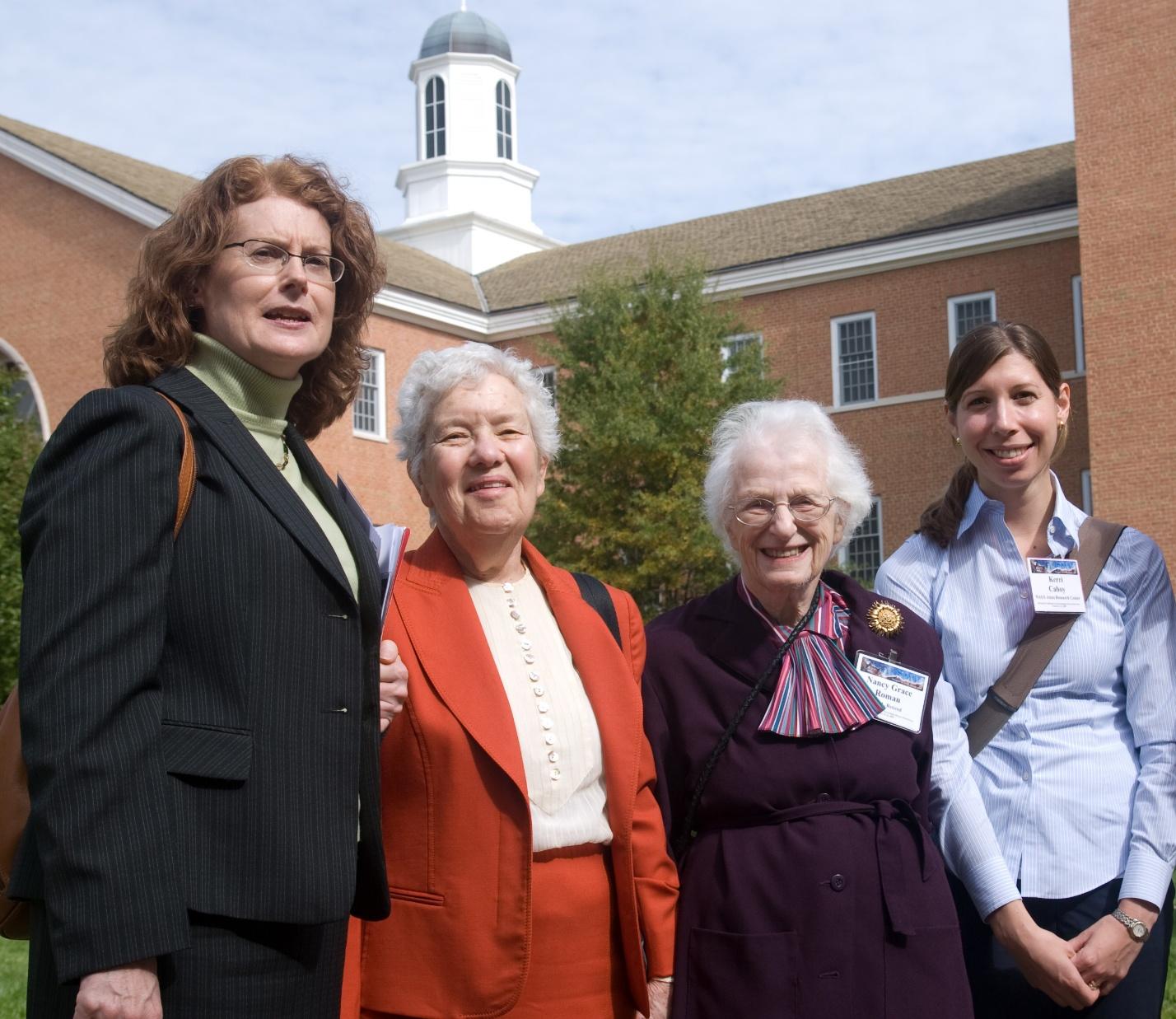
Figure 1: Vera Rubin (second to left) among fellow scientists Anne Kinney, Nancy Grace Roman and Kerri Cahoy at the conference Women in Astronomy and Space Science 2009: Meeting the Challenges of an Increasingly Diverse Workforce in College Park, Maryland (courtesy of Meg Urry.)
Vera Rubin is best known for contributing evidence for the existence of
dark matter through studies of galactic rotation curves. The observatory named after her will engage in
pioneering astronomical work regardless of whether diversity, equity and inclusion are mentioned on its
website. However, the history of DEI efforts by Rubin and others are still worth preserving in themselves,
and urgently so. Dark matter may remain a mysterious and unsolved problem in physics. However, women and
their history of struggle in science must remain visible.
Jörg Matthias Determann teaches history at Virginia
Commonwealth University in Qatar. He is the author of Diversity, Equity, and
Inclusion in Astronomy: A Modern History (Springer, 2023). He thanks Jeanne Vaz
for countless conversations about gender and academia.
Circulating Knowledge: 20 Years On: Conference
Report
Megan Krempa
The “Circulating Knowledge: 20 Years On” conference took place August 7-10, 2024, at
the University of King’s College in Halifax (Kjipuktuk), Nova Scotia (Mi’kma’ki). This
conference served as an extension of the Circulation of Knowledge conference, which took place in August 2004, which set out challenges to the then-dominant
centre-periphery models of the origins and dissemination of scientific knowledge. “Circulating
Knowledge: 20 Years On” intended to re-examine the circulation of knowledge through fostering
international collaborative exchange along the themes of “research”, “translations”,
and “pedagogy”.
Fully hybrid, the conference welcomed dozens of scholars from all corners of the
world—from Norway to Thailand, Brazil to Venezuela, China to Australia, and many more. The conference
opened with the unveiling of the Circulating Knowledge Virtual International Exhibit, led by David
Pantalony, Joshua Nall, Dani Inkpen, and Paige Crosby.
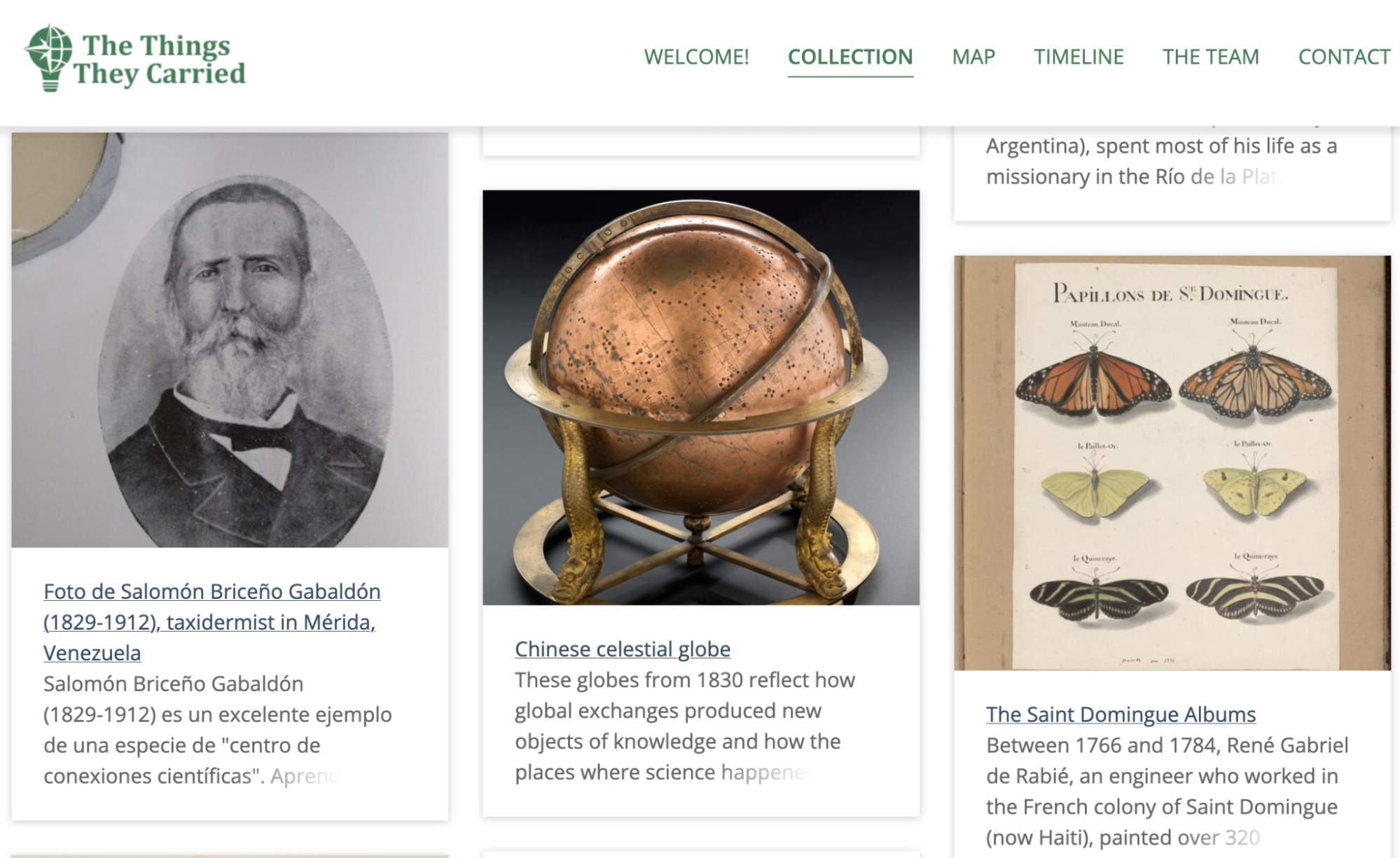
The virtual
exhibit serves to highlight objects and materials that represent the
circulation of knowledge.
Kicking off the conference was a plenary session by James Secord, connecting back to
the 2004 conference, where he gave the keynote address on his “Knowledge in Transit” paper.
Entitled “Seven Questions for the History of Science”, Secord reflected on the changing
landscape of the history of science. Other plenary speakers of the conference included Elise Burton, Fa-Ti
Fan, Sarah Qidwai, Arun Bala, Lesley Cormack, Hyunhee Park, and Geoff Bil.
The special event for the conference was given by Mi’kmaw Elder Dr. Albert Marshall,
entitled “Etuaptmumk (Two-Eyed Seeing) –
walking together with Indigenous and Non-Indigenous knowledges”. The event took place at the Dalhousie
Art Gallery and was so well-attended it was standing-room only. It was made possible due to the generous
support of the Department of Humanities of Cape Breton University and the Dalhousie College of
Sustainability.
The conference also featured a special symposium, “Exploring the Relevance of
Needham’s Legacy for Global Science Studies: Problems and Prospects”, which brought together
scholars to discuss Joseph Needham’s legacy and his iconic work Science and
Civilisation in China. The symposium was sponsored by the Joseph Needham Foundation
for Science & Civilisation.
There was a truly global and diverse set of topics and sessions that
occurred—too many to highlight in this write-up. But for a brief taste of the session topics, some
session titles included Agricultural Knowledge, Modes of Translation, Piracy and Plagiarism, and Imagery and
Translation in China. Though my attention was taken up by ensuring the Zoom sessions were working well
(which at times had me running between different sessions!), the consensus I found was that the quality and
level of presentations were overall excellent.
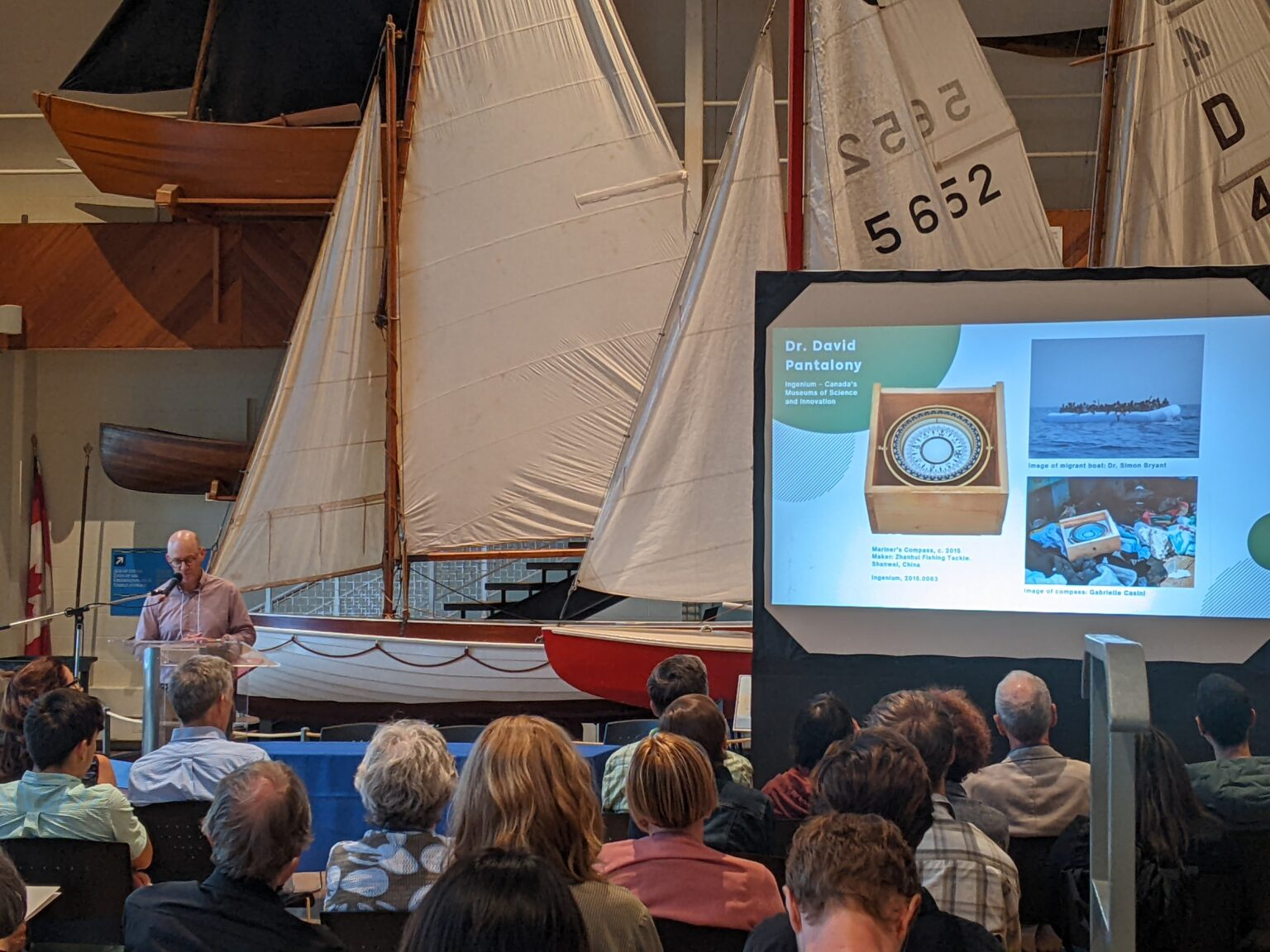
Figure 1: David Pantalony speaking at the Maritime Museum of the Atlantic, by Dani
Inkpen.
The conference would not have been such a success without the
spearheading work from Mélanie Frappier and Gordon McOuat. We are also indebted to those involved on
the program committee, local organizing committee, and the virtual exhibit curatorial committee. The
conference would not have run as smoothly without the help of student workers who helped run the Zoom
sessions: Morag Brown, Alan Iturriaga, Milo Fowler, Henry Leitch, Katie Blatt, and Shayle
Didur-Simon.
The conference was co-sponsored by the Canadian Society for the History and
Philosophy of Science, the British Society for the History of Science, the History of Science Society, the
International Union for History and Philosophy of Science (Division of History of Science and Technology),
and the Joseph Needham Foundation for Science & Civilisation. The conference and virtual exhibit would
not have been possible without funding from SSHRC as a continuation of the Cosmolocal project.
Nearly all sessions have now been posted to the Situating Science YouTube channel (with
apologies for the Imagery and Translation in China session, which due to technical issues was not recorded
properly). You can watch the sessions and panels on
the Situating Science YouTube page.
Megan Krempa is a Master of Journalism student at University of King’s
College, a graduate of the History of Science and Technology Program at King’s, and manages the CSHPS
social media accounts
Figure 2: The Circex “Circulating Knowledge: 20 Years On” virtual
exhibit, Collection page.
Canadian contributions to the 2025 International Congress of History
of Science and Technology
Aaron Sidney Wright
The 27th International Congress of History of Science and Technology was held from 29
June to 5 July 2025, as a hybrid event hosted by the University of Otago, Dunedin, Aotearoa (New Zealand)
and virtually; this was the first meeting in this part of the world. Scholars from Australasia and Asia had
a notably strong presence. The Congress meets every four years, and is organized by the Division for the
History of Science and Technology (DHST) of the International Union for the History and Philosophy of
Science and Technology (IUHPST), an international organization affiliated with UNESCO. It was a large
gathering which expected up to 1,000 participants and ran as many as 20 parallel sessions.
I participated virtually so my comments here will focus on that side of things. I am
based in Kjipuktuk, Mi'kmaki (Halifax, NS) and my family commitments precluded a trip to the Congress.
The hybrid format enabled my participation at all, and judging from viewing several other symposia, the
virtual option greatly increased the depth and breadth of the presentations. The virtual infrastructure was
professionally managed and worked well for my own presentation and most others that I saw. The system
allowed for chat messages between attendees (which did not seem much used); it did not have a virtual
informal meeting space (no loss in my experience). I was required to prerecord and upload my talk, which
provided reliability for the audience. During my session, watching myself speak past 1 a.m. local time
required some fortitude, but I was able to participate in the live question and answer period via Zoom. The
session effectively integrated local voices and remote presenters from Europe and Canada, for which I give
top marks to the organizers. Readers who attended in person, or otherwise, are welcome to write to the
Communiqué with additional observations.
I unofficially surveyed the program and abstracts for contributions from Canadian
institutions, or from speakers I recognized as CSHPS members, 17 of which I overview below. (The online
program search function was not intuitive. My apologies for any omissions.) Canadian contributors spanned
the field from undergraduates to full professors and were distributed throughout the program sessions. Some
conference symposia were dedicated to particular countries (such as China, Japan, and India) or regions
(such as Latin America and Asia); there were no symposia specifically dedicated to Canada or North America.
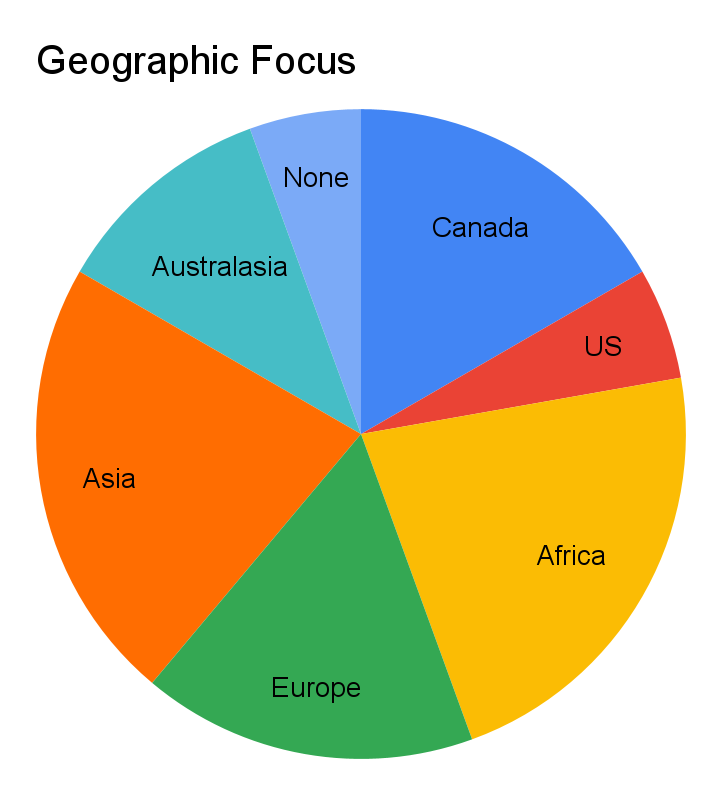
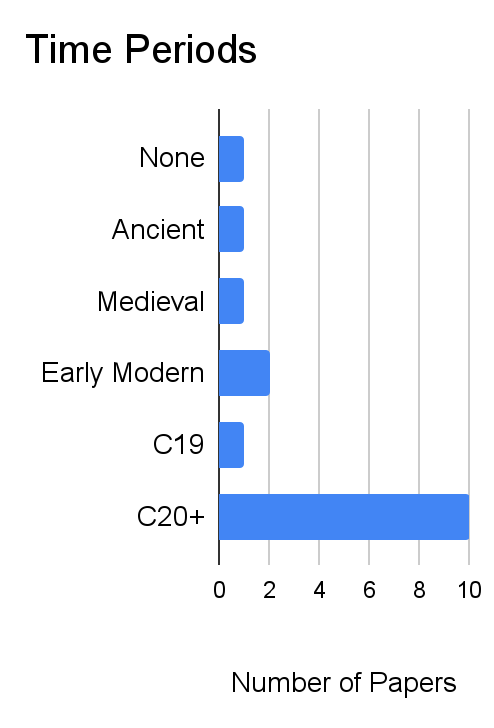
Canadian contributions treated a wide range of geographies, relatively evenly. (In the attached charts,
“none” refers to a primarily methodological contribution.) On the other hand, the historical
focus was strongly weighted to the modern period, within which only one presentation foregrounded the
nineteenth century and all others the twentieth or twenty-first century.
One set of contributions focussed on disciplinary formations, both in the
sciences and the history of science itself. Dani Inkpen's (Mt Allison) “Scribbling the Field: The
glaciological notebooks of William O. Field” connected the material qualities of field notebooks to
the development of twentieth-century glaciology. At sea level, Jennifer Hubbard (TMU) argued that early
fisheries science in North America should be understood as an extension of broader Imperial-Colonial
projects. Using case studies from New Zealand and Southeast Asia, Geoff Bil (U Delaware / U Victoria)
illuminated the struggles of ethnobotany to establish itself as an “interdiscipline” between the
human and natural sciences. My own contribution—part of a symposium marking the 100th anniversary of
Quantum Mechanics—argued that the increasing independence of theoretical physics from experimental
evidence was due in large part to their use of so-called paper tools for idealization and approximation.
Daniella Monaldi (York U) reported on the project to publish the edited collection Women in the History of
Quantum Physics: Beyond Knabenphysik (Cambridge UP), and analyzed both the importance of women to the
development of modern physics as well as the place of women in its history. In another analysis of the
diversity of the field, Sarah Kalmanovitch, an undergraduate student at McMaster, studied History course
outlines to establish the “geographic trends in undergraduate history of science course
curricula”—she asked whether students learned history related to their own geographies. Many
symposia at ICHST are sponsored by official Commissions and Divisions that are structured according to a
scientific discipline, such as the Commission for the History of Ancient and Medieval Astronomy, and
disciplinarity continues to be an important subject—and institutional structure—of
historians' investigations.
Do we still call it social construction? Several presentations analyzed the
interaction of social, cultural, and religious context and the development of science and medicine.
Continuing the theme of disciplinarity, Frank Stahnisch (Calgary) considered the impact of the cultural
background of émigrés from Weimar Germany to North America on the development of neurology and
rehabilitation medicine after World War II. Alexey Kozhevnoikov (UBC) argued for the influence of
physicists' political worldviews and experience of social collectives in the development of quantum
theories of condensed matter and many-particle systems. In the only Canadian contribution on Early Modern
sciences, Mary Yearl (McGill) presented on the interaction of astronomy and religion in “William
Mount's 1583 almanack and perpetual calendar”; she argues that astronomical precision was an
antidote to errors, even in divinity. The pointed, often acronymous, debates over the social construction of
scientific knowledge in the 1980s and 1990s took place in an environment of heavy government (especially
military) support for “big science.” The valuable contributions at ICHST did not as a rule
emphasize constructivism; and I wonder what effect the recent attacks on organized science in the United
States will have on historians' positions going forward.
The question of the interaction of diverse knowledge systems also animated studies of
technology in history. Nnamdi Steven Nnake presented on material from his doctoral research at McMaster on
“Radio and the Telegraphic Origins of Broadcasting in Nigeria.” He situates the social
transformations of electronic communication in earlier telegraphic technologies, and argues for
technology-in-use and user-oriented models for evaluating the interactions of imperial agendas and
Indigenous practices. Lee Johnson, reporting on their undergraduate thesis at Mt Allison, explored
technological exchanges between British mountaineers and Himalayans in the 1930s to reconsider the meaning
of “expertise.” Sarah Symons (McMaster) demonstrated how the diffusion of timekeeping
technology—Ancient Egyptian water clocks—can help to reconstruct the process of astronomical
knowledge transfer in the ancient world. Spanning ancient and modern worlds, Dirk Schlimm (McGill) proposed
a method for comparing mathematical systems across time and culture, which is abstracted from a
computational technology, the abacus.
Sajjad Nikfahm Khubravan (PhD McGill 2022) won a 2023 Division of History of Science
and Technology Dissertation Award for “The Reception of Ptolemy's Latitude Theories in Islamic
Astronomy.” His study establishes the importance of an overlooked area of the history of Islamic
astronomy over an 800 year span, and includes 15 new English translations of primary source texts from
Arabic and Persian.
Canadian contributions seem aligned with the broader Congress theme of
“peoples, places, exchanges, and circulation.” There were four plenary sessions: on Southern
Māori astronomical knowledge; on History of medicine in the Pacific; on Pacific nuclear history and
activism; and on the past and future of the History of Science in a dialogue with Roy MacLeod. They shared
an aspiration to global topics, a bias toward modern events, and intellectual focus on disciplinarity and
the interactions of Indigenous and colonial actors.
A series of symposia posed a (rhetorical?) question: History of Science in crisis? One area of
contention was the degree to which the histories we tell engage with the content of the science itself, or
the process of discovery. Some panelists held that a lack of focus on scientific detail contributed to a
feeling that our discipline lacks cohesion; or of decline in certain subfields; or of disconnection with
scientists and science educators. There is a more-or-less explicitly stated sense of conflict between
technical detail and the imperative to globalize and diversify our narratives, and to connect to audiences
in History (proper) or policy. For the purposes of this overview, working mostly from abstracts, it is not
possible to evaluate presentations on this score. But on an optimistic reading, synthesis is possible. Roy
MacLeod pointed to Steven Shapin and Simon Schaffer’s Leviathan and the Air
Pump (1985) as History of Science that impacted general political History, and yet the
book surely attends to the messy process of discovery. In recent Canadian work, I think of Max
Liboiron’s (2021) Pollution is Colonialism, which
presents both an Indigenous, particularly Métis, framework for understanding pollution and an
internalist, conceptual history of pollution science. The presentations at ICHST 2025 show Canadian scholars
continuing to shape the discipline, across its multiple ongoing dialogues.
Aaron Sidney Wright is co-editor of the Communiqué.
New Books
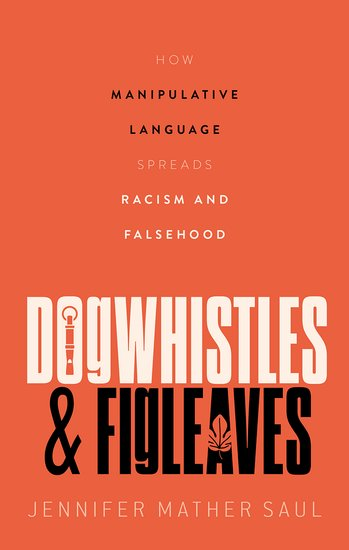
Jennifer Saul. Dogwhistles and Figleaves: How Manipulative
Language Spreads Racism and Falsehood. Oxford University Press, 2024
It is widely accepted that political discourse in recent years has become more openly
racist and more accepting of wildly implausible conspiracy theories. Dogwhistles and
Figleaves explores ways in which such changes--both of which defied previously
settled norms of political speech--have been brought about. Jennifer Saul shows that two linguistic devices,
dogwhistles and figleaves, have played a crucial role. Some dogwhistles (such as “88”, used by
Nazis online to mean “Heil Hitler”) serve to disguise messages that would otherwise be rejected
as unacceptable, allowing them to be transmitted surreptitiously. Other dogwhistles (like the 1988
“Willie Horton” ad) work by influencing people in ways that they are not aware of, and which
they would likely reject were they aware. Figleaves (such as “just asking questions”) take
messages that could easily be recognized as unacceptable, and provide just enough cover that people become
more willing to accept them. Saul argues that these devices are important for the spread of racist
discourse. She also shows how they contribute to the transmission of norm-violating discourse more
generally, focusing on the case of wildly implausible conspiracist speech. Together, these devices have both
exploited and widened existing divisions in society, and normalized racist and conspiracist speech. This
book is the first full-length exploration of dogwhistles and figleaves. It offers an illuminating and
disturbing view of the workings of contemporary political discourse. (From the publisher)
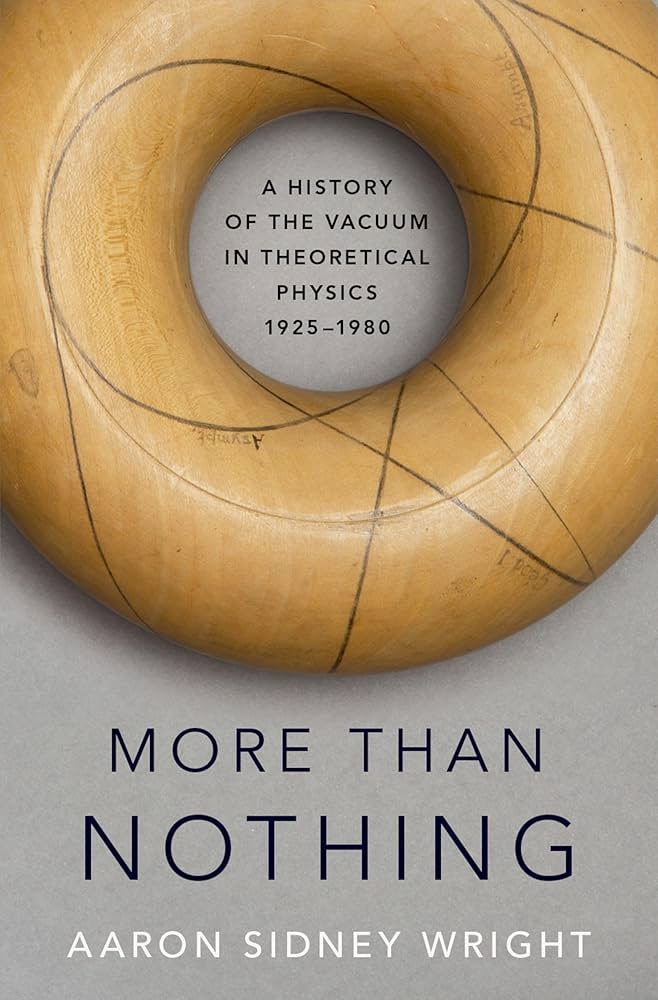
Aaron Sidney Wright. More than Nothing: A
History of the Vacuum in Theoretical Physics, 1925–1980. Oxford University
Press, 2024
This book is a history of how it came to be that our best physical theories of
particles, gravity, and spacetime are theories of the vacuum, of empty space. Today, physicists calculate
“vacuum expectation values,” predict the influence of “vacuum fluctuations,” and
describe universes and black holes composed of dynamic, yet empty, spacetime. More than this, vacuum physics
seems paradoxical. Physicists depict the vacuum as by turns placid and roiling; as a rippling sheet and a
crashing sea. More than Nothing provides new interpretations of seminal advances in the history of
relativistic quantum theory, including Paul Dirac’s positron theory and Richard Feynman’s and
Julian Schwinger’s Quantum Electrodynamics. It provides sustained analysis of understudied figures,
including John Wheeler’s geometrodynamics, Roger Penrose’s diagrammatic methods, and Sidney
Coleman’s false vacuum. These studies analyze physicists’ diverse interests. This reveals
surprising connections between positron theory and mathematical beauty; between fluctuations and Marxian
philosophy; between the psychology of “impossible objects” and drawings of black holes; and
between symmetry breaking and science fiction. The development of the physics of the vacuum was inseparable
from the development of aesthetics, art, psychology, fiction—from culture. By analyzing scientific
practice—as documented in notes, correspondence, drawings, laboratory notebooks, and published
material—this book shows that physicists chose to center the vacuum because of its utility. Over and
again, theorists found the vacuum useful. (From the publisher.)
CSHPS 2024 Annual General Meeting Minutes Montreal, June
21, 2024
In attendance: Allan Olley, Clarisse Paron, Ellie
Louson, Ernie Hamm, Isaac Record, Ingo Brigandt, Ava Spurr, Victoria Fisher, Mark Alliksaar, Greg Rupik,
Erik Nelson, Andrew Lopez, Matthew McLaughlin, Tyler Paetkau, Melanie Frappier, Paul Bartha, Tara Abraham,
Lesley Cormack, Tyler Paetkau, Letitia Meynell, Rachel Katz, Pierre-Olivier Methot, Mark Solovey, Marga
Vicedo, Carlo Calvi, Olivier Grenier, Alan Iturriaga, Jennifer Coggan. Owen Chevalier, Pat Finnigan, Andrew
Reynolds, Camille Ferrier (Federation), Karine Morin (Federation), Lana Galbraith (Federation)
CSHPS President Tara Abraham calls meeting to order.
Adoption of agenda
Moved by Isaac Record. Second by Tyler Paetkau. Motion passes.
Adoption of 2023 AGM minutes
Moved by Lesley Cormack, seconded by Isaac Record. Motion passes.
Comment from Tara Abraham: Executive Committee will follow up on
some of the ideas from both the 2023 and 2024 AGMs.
President’s Report (Tara
Abraham)
See report for details.
Highlights
Reminder: Circulating Knowledge: 20 years
on, Aug 7-10 at King’s College. Contact Melanie Frappier for
details.
Thank-you messages: volunteers, Executive, Advisory Board, UQAM,
CSHPS Community and many others for support with a very challenging Congress 2024.
Important decision: how do we handle hybrid/in-person conferences
moving forward?
Discussion.
Lesley Cormack: we need to hear from Congress reps
Ernie Hamm: stressed importance of an in-person event
[Discussion of support from the Federation during run-up to Congress 2024]
Remembering Kathleen Okruhlik (Andrew
Reynolds and Letitia Meynell)
Acknowledged passing of Kathleen Okruhlik, past CSHPS president 2010-13 and
beloved mentor to many students. Details from her life and career. Important roles in CSHPS and at Western
University; Western has created a memorial page where we may leave comments. She was of great importance in
feminist philosophy and feminist philosophy of science. Postcards (women in science) will be collected and
sent to her husband, Jim Brown.
5,6. Secretary &
Treasurer Reports (Paul Bartha)
Secretary report highlights
Continued increase in membership (exceeding 2019
levels). Bulk membership initiative recruited 38 grad students and 4 new undergraduate members.
Treasurer Report highlight
Slight surplus, balance just over $30,000. However, we face pressure
from inflation and an end to the funding of student travel bursaries from Lesley Cormack. In order to
continue the bursaries, we propose a modest fee increase (item 7).
Discussion
Lesley Cormack: clarification about grant funding for
student travel.
Lesley Cormack: we need to keep an eye on costs and benefits
of continued participation in Congress.
Letitia Meynell: catering costs would have been up 25% over
2023 event. General discussion of costs and benefits of participation in Congress.
Motion to approve reports: Tara Abraham; seconded by
Letitia Meynell. Motion passes.
Membership fee increase
(Paul Bartha)
Summary
$5 for graduate/ independent/ underemployed and $15 for
regular members. The student increase keeps pace with 20% inflation in past 5 years. The regular
increase will help to maintain the travel bursary program.
Bulk membership fee for graduate students will rise to $25.
Question: should we introduce
separate category for undergraduate membership?
Discussion
Just one student category? Is increase adequate to cover cost of
bursaries?
Consensus: one student category is adequate.
Consensus: fee increase may not be adequate but we will review
next year.
Motion to approve fee schedule: Tara Abraham; seconded by Isaac
Record. Motion passes.
Programme Committee
Report (Letitia Meynell)
See report for full details.
Thanks to those who attended. Multiple thank-yous for help
with challenge of moving to UQAM, organizing hybrid sessions, etc.
Number of submissions is down from 2023. We need more
French, more History of Science. Suggestions and discussion welcome.
Discussion
More participants should consider proposing sessions rather than
individual papers. Use CSHPS list-serv (gaggle) to pitch session ideas.
More effort to advertise CSHPS conference at other events.
Consider asking instructors to encourage their grad students to
submit papers to CSHPS.
EasyChair may not be worth it. Plan for 2025: use Google Forms for
submissions, hire a student to help with organizational tasks.
Hadden Prize (Tara Abraham)
Hadden Prizes and (Graduate Student Merit Awards) awarded to Clarisse Paron
(Dalhousie) for "Are the New American Pediatric Obesity Guidelines Eugenic? Eugenic Logics and the
Medicalization and Pathologization of Children’s Bodies" and Olivier Grenier (UQAM) for "The
complexity of education and epistemic pluralism: three challenges"
[At this point, representatives of the Federation spoke. See
summary under Item 16: Congress 2025]
Communiqué
report (Kevin Kaiser)
See report. Communiqué now plans one
issue/year, next projected for fall 2024.
Webmaster report (Allan Olley)
Report highlights: New website and list-serv continue to function well. List-serv
using gaggle.mail. Send him news, updates, announcements.
Social Media Report (Ellie Louson)
See report for full details.
The committee continues to share relevant content through
social media channels. There are lots of ideas to reinvigorate these channels, but the committee seeks
interested people.
Graduate Student Advisory Committee (Rachel
Katz)
See report
Focus in 2023-4 was on reviving this new committee.
Major idea: grad-specific email list or What’s App
group. Please share thoughts with the committee.
Major objectives: growth of grad community in HPS and STS (even if
mainly virtual).
Possible initiative: regional events that could include HPS
/ STS grad students even if not in CSHPS. This could help build the graduate student community, with
more frequent meetings.
More general objective: use CSHPS as a networking hub.
Request: funding for grad student lunch or dinner.
Call for one new member: write if interested.
Nominating Committee Report (Melanie
Frappier)
See report for names of nominees and continuing officers.
Still needed: Local Arrangements Coordinator for George
Brown 2025 (likely to be appointed by George Brown College).
Motion to approve report and elect officials named in the nominating committee report:
Ernie Hamm; seconded by Lesley Cormack. Motion passes.
Further nominations from the floor and
election
Call for nominations. None made.
Congress 2025: information and
discussion
Part I
General discussion led by Federation reps (Karine Morin, Lana Galbraith, Camille Ferrier)
Karine Morin: unprecedented issues
for Congress in 2024, but clear message of past 5 years (including pandemic) is that Congress has to
change
Large-scale meetings remain valuable: Federation will
launch into discussions of Congress 2025 and beyond, inviting input and participation.
Congress 2025 at George Brown College (first time at a
college): advantages to extending Congress to the larger community including colleges.
Discussion
Ellie Louson: thanks to Federation for on-site child
care.
Lesley Cormack: important for humanists to get together.
We’ve been in crisis mode since 2020. Major challenges remain, but it is important to maintain
Congress for highlighting work of humanists and social sciences, and fostering connections.
Letitia Meynell: we should prioritize our academic
mission. Congress should consider a “bottom-up” approach to the “Big Thinking”
series, so that keynote speakers come from the member societies.
Camille Ferrier (in response): “Big Thinking” is
interdisciplinary programming. Many speakers are members of participating associations. The Federation
supports the associations in many ways.
Karine Morin (in response): it’s good to have
featured speakers, but agrees with Meynell’s point that there could be more engagement with
organizations. Similarly: perhaps there could be more recognition of grad students and early career
scholars.
Melanie Frappier: Congress should find ways to cut
costs, make more accessible to participants w/o support from institutions, especially if the intention is to
expand to the colleges.
Part II
Discussion by CSHPS members of Congress 2025
Congress 2025: Toronto (George Brown College). Federation will
assign LAC.
Discussion.
Question: Should we have two keynote speakers? What should
be the priority and procedures for identifying keynote speakers?
Rachel Katz: We appreciate keynote speakers who attend
other talks and are very involved in the event.
Tyler Paetkau: Invite existing members of CSHPS
community.
Ingo Brigandt: further reflections about importance of
interaction between keynote speakers and graduate students.
[Unable to hear additional comments]
Other business
None
Tara Abraham called meeting to a close
Submissions
Communiqué relies on and welcomes your updates and contributions!